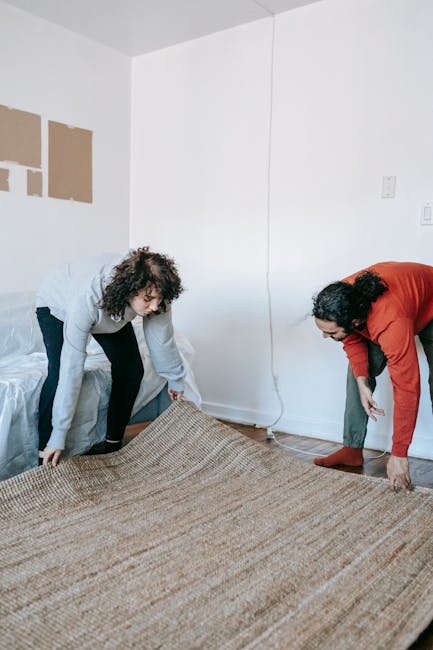
What to do with bulky carpet waste in Merton: a practical local guide
If you have an old carpet rolled up in the hallway, a heavy offcut in the boot of the car, or a whole room's worth of flooring sitting in the spare room, you are probably wondering what to do with bulky carpet waste in Merton without making a mess of it. Truth be told, carpet disposal is one of those jobs that looks simple until you actually start lifting, cutting, and trying to find the right route for it.
This guide walks you through the sensible options: reuse, reuse again if possible, collection, recycling, safe handling, and when it makes more sense to bring in help. It is written for people dealing with home renovations, end-of-tenancy clear-outs, or a tired carpet that has finally reached the point where no amount of vacuuming will save it. If you are planning a broader refresh, you may also find the wider advice in our resident advice on Merton living useful for fitting the job into everyday local life.
Table of Contents
- Why bulky carpet waste in Merton matters
- How carpet waste disposal works
- Key benefits and practical advantages
- Who this is for and when it makes sense
- Step-by-step guidance
- Expert tips for better results
- Common mistakes to avoid
- Tools, resources and recommendations
- Law, compliance, standards, or best practice
- Options, methods, or comparison table
- Case study or real-world example
- Practical checklist
- Conclusion
- Frequently asked questions
Why bulky carpet waste in Merton matters
Carpet is awkward waste. It is large, dusty, often heavier than it looks, and can be unpleasant to move once it has been damp, stained, or tucked under furniture for years. In a borough like Merton, where many homes involve stairs, narrow hallways, shared entrances, or parking that is never quite where you want it, the practical side matters just as much as the disposal side.
There is also a simple reason this topic matters: carpets do not behave like ordinary household rubbish. A rolled carpet can block bins, create trip hazards, and leave debris in communal areas. If you live in a flat, manage a rental, or are emptying a property between tenants, the wrong disposal choice can become a neighbour issue very quickly. Nobody wants to be that person with a muddy hallway and a carpet roll leaning against the lift doors. Not ideal.
Beyond convenience, there is the environmental angle. Some carpet materials can be reused or recycled, but only if they are separated, kept relatively clean, and sent the right way. When people simply dump carpet with general waste, it tends to add cost and waste space unnecessarily. A more considered approach saves time, reduces hassle, and usually feels better afterwards as well.
For households planning a broader reset, carpets often sit alongside other soft furnishings and cleaning jobs. That is why services like end of tenancy cleaning in Merton or house cleaning support can be relevant when a property needs a proper turnaround rather than a quick tidy.
How bulky carpet waste in Merton works
The process usually depends on three things: the size and condition of the carpet, how urgently you need it gone, and whether the material can be reused, recycled, or only disposed of. A clean wool carpet offcut is very different from a water-damaged synthetic roll with underlay attached and tack strips still on the back. That sounds obvious, but in practice people often treat them the same. They are not.
At a high level, the options tend to be:
- Reuse - suitable for clean offcuts, runners, shed flooring, pet areas, or DIY protection.
- Donation or onward use - possible where the carpet is in usable condition and a local organisation or tradesperson can take it.
- Recycling or specialist recovery - better for larger volumes or separated carpet materials.
- Bulky waste collection - often the most practical route for full-room removals.
- Private removal help - useful when access, lifting, or timing is the main headache.
The main job before disposal is prep. Carpets should usually be cut into manageable strips, rolled tightly, secured with tape or cord, and kept as dry and clean as reasonably possible. If there is underlay, grippers, nails, or contaminated debris, these may need to be separated. It is the boring part, but it makes the rest easier. A lot easier, actually.
If the carpet forms part of a larger clearance after redecorating or a tenancy change, it can help to think of it as one piece of a wider clean-up plan. Our services overview gives a sense of how cleaning, clearing, and finishing tasks often fit together in real homes and workplaces.
Key benefits and practical advantages
Dealing with bulky carpet waste properly is not just about "getting rid of it". The right approach gives you a cleaner, safer, and more predictable result. That matters whether you are a homeowner, landlord, letting agent, or a tenant trying to leave a place in decent condition.
- Less disruption - you avoid last-minute dragging, dust trails, and awkward storage in hallways.
- Safer handling - fewer chances of strained backs, cuts, or trips over rolled carpet.
- Better presentation - important if the property is being cleaned, sold, or re-let.
- More suitable disposal route - useful when the carpet can be reused, broken down, or handled separately.
- Lower stress - and let's face it, carpet waste is one of those jobs people put off until it starts annoying them every time they walk past it.
There is also a time benefit. If you can identify early whether your carpet is reusable or genuinely waste, you avoid wasting energy on the wrong route. A heavy roll sitting by the front door for three days because "we'll sort it later" is a classic trap. We have all seen it. Or at least something close enough.
Expert summary: The best carpet waste solution is usually the one that matches the carpet's condition, your access challenges, and how much time you actually have. Start with reuse potential, then move to collection or specialist removal if needed.
Who this is for and when it makes sense
This advice is useful for a few common situations in Merton:
- Tenants moving out who need to clear old flooring responsibly.
- Landlords and agents preparing a property between lets.
- Homeowners replacing carpets after redecorating or damage.
- Businesses removing old flooring during an office refresh.
- DIY renovators dealing with offcuts after fitting new carpet or underlay.
It also makes sense if the carpet is not just "old" but bulky in the literal sense: thick pile, large dimensions, damp from a leak, or fitted in several rooms. In those cases, you are not really asking how to throw away a carpet; you are asking how to manage a mini clearance job without turning the property into a storage yard.
For commercial or workplace settings, timing matters even more. A front office with loose rolled carpet by the entrance is not a great look for clients. If you are coordinating a wider tidy-up, our office cleaning Merton page may be helpful for thinking about the surrounding clean-down, even if the carpet disposal itself needs a separate plan.
Step-by-step guidance
Here is a straightforward way to handle bulky carpet waste without overcomplicating it.
1. Check whether the carpet can be reused
Before you cut anything up, look at the condition. If it is clean, only lightly worn, and not contaminated by mould, pet urine, or heavy adhesive, it may still be useful elsewhere. Small offcuts can become runner mats, cupboard liners, shed flooring, or protective material for paint jobs.
2. Separate useful materials
If possible, remove underlay, trim loose edges, and take off any metal strips, tacks, or fixings. This makes handling safer and can help with recycling or cleaner disposal. A little extra effort here saves a lot of awkward swearing later.
3. Cut the carpet into manageable sections
Use a sharp utility knife and a stable surface. Work slowly. Long strips are easier to lift than one giant bundle, especially in stairs or tight hallways. If the carpet is very thick, fold it back on itself first so you can cut through in sensible lengths.
4. Roll and secure each piece
Roll each strip tightly and secure it with tape, string, or cable ties. This keeps dust under control and stops the roll springing open in the car or at the kerb. It also makes it much easier to carry through a property without nicking walls.
5. Move it safely
Use gloves, lift with your legs, and don't try to be heroic about it. Bulky carpet has a sneaky way of catching on door frames, bannisters, and the corner of the radiator. If the access route is awkward, take a minute to plan it out first. That minute can save you twenty.
6. Choose the right disposal route
Once the carpet is prepared, decide whether it goes for reuse, specialist removal, or a bulky-waste-style collection. If you are dealing with a full property clear-out or a time-sensitive job, a more structured service often makes more sense than a DIY trip in a small car with the seats folded down and no room left for anything else.
Expert tips for better results
Over the years, a few practical habits make a big difference.
- Keep carpet as dry as possible. Wet carpet gets heavier, smells worse, and can become difficult to handle.
- Remove nails and grippers early. They are small, sharp, and easy to forget about until someone gets scratched.
- Work room by room. This prevents the usual "everything is everywhere" chaos.
- Label piles if you have more than one carpet type. Useful when some pieces are reusable and others are not.
- Plan the route out of the building. A tidy path saves walls, paintwork, and your patience.
- Protect common areas. In flats or shared buildings, a sheet or dust cover can be the difference between a calm exit and an irritated neighbour.
One small but useful observation: the first five minutes usually tell you whether this is a quick job or a proper logistics exercise. If the carpet is coming up cleanly and the path to the door is open, great. If not, slow down and plan. That is the difference between "sorted" and "why did we start this today?"
If the carpet waste is part of a cleaner handover, pairing disposal with a deep clean is usually the neatest route. You might look at carpet cleaning in Merton first if the floor covering is staying, or at domestic cleaning support if the rest of the property needs attention too.
Common mistakes to avoid
Most carpet disposal problems come from rushing. Here are the ones worth avoiding.
- Leaving carpet loose and unrolled - it is harder to carry and more likely to snag.
- Mixing carpet with general rubbish - this can create a bulky, awkward load that is difficult to sort later.
- Forgetting underlay and fixings - these are often the parts that cause injuries or mess.
- Trying to move too much at once - one heavy roll is manageable; four heavy rolls and a stairwell are another matter.
- Assuming all carpet is recyclable in the same way - material type and condition matter.
- Ignoring access issues - lifts, parking, and shared entrances all affect the job.
Another common one? People clean the carpet waste less carefully than the rest of the job. Then dust ends up everywhere. A little shake-out outside, a quick sweep, and proper bagging where needed can save the whole place from that faint old-carpet smell that seems to linger for days.
Tools, resources and recommendations
You do not need a huge toolkit to manage bulky carpet waste, but a few basics help.
- Utility knife for controlled cutting.
- Heavy-duty gloves to protect hands from tacks and rough fibres.
- Dust sheets or tarpaulin to protect floors and shared areas.
- Strong tape or ties to secure rolls.
- Mask if the carpet is particularly dusty or has been in storage.
- Trolley or sack truck if the pieces are heavy and access allows it.
In terms of service support, it helps to look at the bigger picture. If you are clearing a home after tenancy, combine carpet disposal with end of tenancy cleaning in Merton so the property is not left half-done. If you are sorting a mixed clear-out, the wider services overview page can help you decide which job should come first.
For practical planning, it is also worth checking the pricing and service expectations before committing to any removal route. A quick look at pricing and quotes can make budgeting a lot less guessy. And yes, guessy is a word in spirit, if not in the dictionary.
Law, compliance, standards, or best practice
When dealing with carpet waste in the UK, the safest approach is to follow general waste-handling best practice and any local collection rules that apply to your property type. The exact method can depend on whether you are a householder, landlord, managing agent, or business owner, and whether the waste is being handled as part of a domestic clear-out or a commercial job.
In plain English, the main compliance themes are:
- Do not fly-tip or abandon waste. Carpet left beside bins or in common areas can quickly become a problem.
- Separate hazardous or dirty materials when needed. Damp, mouldy, or contamination-heavy carpet should be handled cautiously.
- Use reputable waste handlers where appropriate. Good operators should know how to manage bulky items and keep proper processes.
- Protect people and property. Safe lifting, clear access, and tidy staging areas matter.
For landlords and businesses, there is a practical duty to avoid leaving waste in a way that creates risk or nuisance. You do not need to overthink it, but you should think it through. Especially in communal buildings, where one careless roll of carpet can become everyone's problem by lunchtime.
If you want to understand how a service provider approaches safety and reliability, our insurance and safety and health and safety policy pages explain the standards side in plain language. For customer reassurance on service terms and practical expectations, terms and conditions and privacy policy are there as well.
Options, methods, or comparison table
Here is a simple comparison of the main ways to deal with bulky carpet waste in Merton.
| Option | Best for | Pros | Watch-outs |
|---|---|---|---|
| Reuse at home | Clean offcuts or partial sections | Cheap, immediate, practical | Only works if the carpet is still in decent condition |
| Donation or onward use | Usable carpet with limited wear | Reduces waste, useful for others | Needs clean, manageable material |
| Recycling route | Separated carpet and underlay where accepted | Better environmental outcome | May require prep and specific acceptance criteria |
| DIY bulky waste handling | Small to medium jobs | Flexible, hands-on, low direct cost | Time-consuming; lifting and transport can be awkward |
| Professional removal support | Large, heavy, or time-sensitive jobs | Convenient, quicker, less physical strain | Cost is usually higher than doing it yourself |
The "best" method is rarely the same for everyone. A tenant with one room's worth of carpet may manage fine with careful DIY prep, while a landlord clearing three floors after renovation will usually value time and consistency over doing it all by hand.
Case study or real-world example
Imagine a ground-floor flat in Merton that has just finished a light refurbishment. The old lounge carpet is worn but dry, the bedroom offcuts are still usable, and the hallway carpet is only going because the new flooring is being laid the next morning. In that sort of situation, the smartest move is to sort the material into two piles before anything leaves the property.
The usable offcuts get kept aside for protection in the next project. The larger rolls are cut, tied, and moved in stages so the hallway stays clear. The underlay is separated, and all fixings are checked before the final sweep. The whole thing sounds modest, but it prevents the common chain reaction of dust, delays, and "where did we put that roll?" confusion.
A slightly different example: an office near the centre of Merton replacing old carpet tiles and a reception runner after years of traffic. There, the job is less about reuse and more about tidy removal, minimal disruption, and working around opening hours. That is where a coordinated plan matters. A bit of scheduling goes a long way.
In both cases, the winning formula is the same: prepare first, move in stages, and choose the disposal path that matches the real condition of the waste. Not the hoped-for condition. The real one.
Practical checklist
Use this quick checklist before you move bulky carpet waste.
- Confirm whether the carpet can be reused or must be discarded.
- Measure or estimate how much carpet you are dealing with.
- Check for dampness, mould, adhesive, or contamination.
- Remove grippers, nails, and loose fixings.
- Cut the carpet into carryable lengths.
- Roll and secure each section tightly.
- Protect floors and shared areas on the route out.
- Arrange enough help for stairs, tight corners, or heavy bundles.
- Choose the disposal method before moving everything outside.
- Do a final sweep for fibres, dust, and small debris.
If you are clearing more than just the carpet, it is often worth pairing the task with broader domestic or office cleaning so the property feels genuinely finished, not half-sorted.
Get a free quote today and see how much you can save.
Conclusion
So, what to do with bulky carpet waste in Merton? The short answer is: assess it properly, separate anything reusable, prep it safely, and choose the disposal route that fits the size and condition of the job. For small offcuts, DIY handling may be perfectly reasonable. For larger, heavier, or time-sensitive clear-outs, a more supported approach is usually worth it.
What matters most is not overcomplicating it. A little planning, the right tools, and a calm pace can save a lot of effort. And if you have ever wrestled a stairwell with a carpet roll that seems to get wider with every turn, you will know exactly why that calm pace matters.
Handled well, carpet waste becomes just another finished job. Clean path, clear room, done. That is a good feeling, to be fair.
Frequently Asked Questions
Can I put bulky carpet waste out with normal household rubbish in Merton?
Usually, no. Carpet is bulky and awkward, so it is better treated separately from everyday bin waste. Breaking it down first and using the right collection or removal route is usually the cleaner option.
Do I need to cut carpet before moving it?
In most cases, yes. Cutting it into shorter, rollable sections makes it much safer and easier to carry through doors, stairs, and shared hallways.
Can old carpet be recycled?
Sometimes, but it depends on the material, condition, and whether it is separated from underlay and fixings. Clean, dry carpet is generally a better candidate than damaged or contaminated material.
What should I do with carpet underlay?
Underlay should usually be separated from the carpet where possible. It can be treated differently depending on its material and condition, so keeping it apart makes sorting much easier.
Is it worth keeping carpet offcuts?
Yes, if they are clean and in decent condition. Offcuts can be useful for DIY protection, cupboard lining, storage spaces, or temporary floor covering during decorating.
What if the carpet is wet or mouldy?
Handle it carefully and avoid leaving it indoors for long. Wet or mouldy carpet is heavier, less pleasant, and may need special caution because of the mess and odour involved.
How do I carry heavy carpet safely?
Use gloves, keep the roll tightly bound, and lift in small stages rather than trying to move everything at once. If stairs or narrow routes are involved, get help.
What is the best option for a full house carpet removal?
For a full-house job, a structured removal or bulky waste solution is often more practical than repeated DIY trips. It saves time and usually keeps the property tidier during the process.
Can carpet waste be left in shared areas while I wait?
It is better not to. Shared entrances, corridors, and communal bins can become blocked quickly, and carpet left there may cause inconvenience or complaints.
Should I clean the floor after removing the carpet?
Yes. Once the carpet is out, a proper sweep or vacuum is worth doing before new flooring goes down or the room is handed back. Little bits of debris can be surprisingly persistent.
What is the safest way to prepare carpet for disposal?
The safest approach is to remove fixings, cut it into manageable pieces, roll it tightly, and keep the path clear. If the carpet is large or awkward, do it in stages instead of rushing.
What if I am clearing carpet as part of an end of tenancy job?
Then it is smart to coordinate disposal with cleaning and final presentation. That way the property is ready as a whole, rather than being left with one last messy job hanging around.